
Transform Your Fragmented Scientific Data into Scientific Intelligence
Structure and connect scientific data across systems into a unified semantic layer—enabling reusable knowledge, explainable insights, and trusted scientific intelligence.
Built for research teams, laboratories, and data-driven scientific organisations.

Scientific data is fragmented and difficult to reuse.
Why Chemantics
Chemantics structures scientific knowledge in a unified semantic graph—centered on chemical and biological entities.
Traditional systems register scientific entities and data
Chemantics transforms them into connected scientific knowledge—from the ground up.
De-Novo Entity Registration
Structure scientific data directly at the source

Chemantics enables de novo registration by structuring scientific data at the source. Scientific Entities are captured directly into a unified semantic model. This ensures consistency, eliminates fragmentation, and creates connected scientific knowledge from the very beginning.
Chemantics structures scientific data at the source—capturing it directly as structured, connected knowledge from the beginning.
A Structured Scientific Data Model
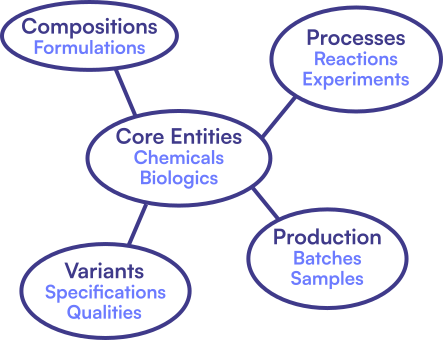
Chemantics separates what a scientific entity is from how it is defined, observed, and realized—connecting all layers into one semantic graph.
A Scientific Integration Layer
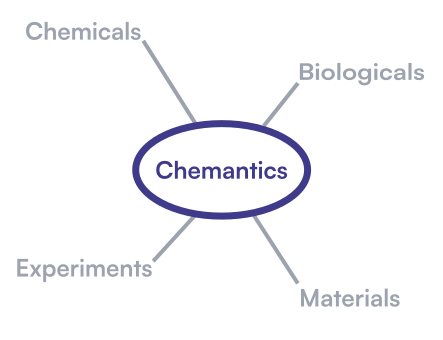
Chemantics integrates data across existing systems, linking chemical, biological, experimental, and material data without disruption. Instead of replacing your infrastructure, Chemantics connects and contextualizes data—bringing it into a unified semantic layer.
Non-intrusive Integration
Integrate existing systems without disruption
Chemantics connects seamlessly to existing systems, unifying data across registration platforms without disruption. All your scientific entities are transformed into a structured semantic layer. Without impacting current workflows, information becomes connected, contextual, and ready to be linked across knowledge graphs.
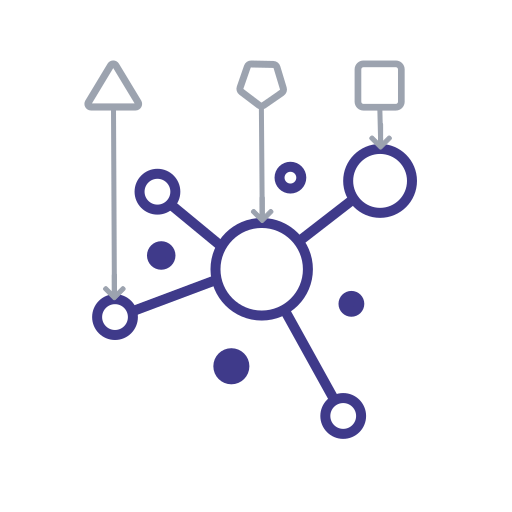
Chemantics integrates into existing systems, linking registration data without disruption—turning raw data into structured, connected scientific knowledge.
Hybrid Integration
Combine existing systems with semantic‑native data capture
Chemantics supports a hybrid approach, combining existing systems with semantic-native data capture. While some data continues to be managed in current registration systems, new or selected data domains can be created directly within Chemantics. This allows organisations to extend their infrastructure step by step, unifying data into a connected semantic layer without requiring a full system replacement.
Chemantics enables a hybrid approach—combining existing systems with semantic-native data capture to progressively build connected scientific knowledge.
External Data Integration
Connect external data sources to internal systems
Chemantics integrates both internal and external data sources into a unified semantic layer. Scientific data from internal systems can be combined with external datasets, references, or partner data to create a richer, connected knowledge base. This enables broader context, improved collaboration, and more comprehensive insights across organisational and domain boundaries.
Chemantics integrates internal and external data sources—creating a unified, connected scientific knowledge layer across systems and domains.

Key Challenges in Scientific Data Management
Scientific data is complex, distributed, and difficult to reuse. In most organisations, information remains fragmented across systems, limiting its value. The challenges below highlight where this breaks down.

Integration without Harmonization
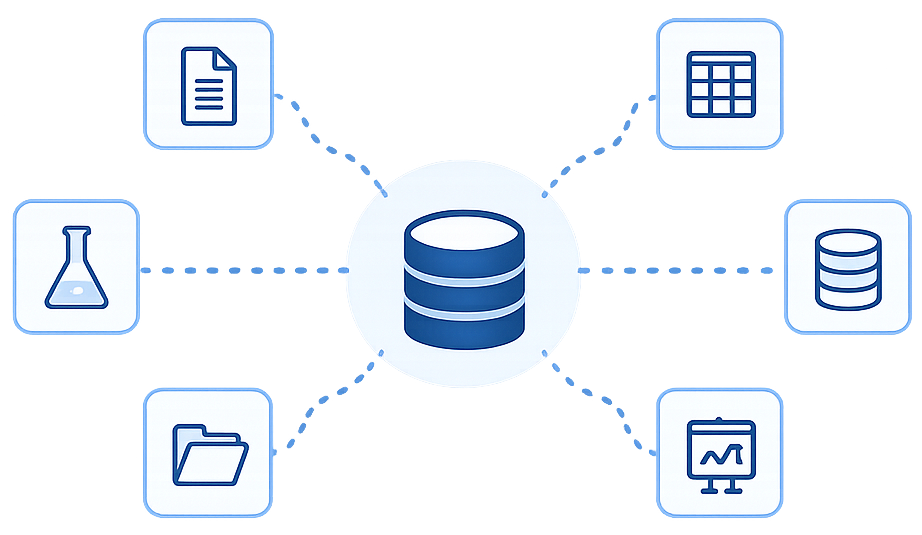
Internal and external data are integrated but not standardised, limiting consistency and reuse.

Chemantics provides a unified semantic layer that standardizes and connects scientific data for consistent access and reuse.
Fragmented Master Data

Scientific data is scattered across systems, limiting access and reuse.
Chemantics unifies master data into a consistent, governed foundation across systems and domains.
AI Without Context
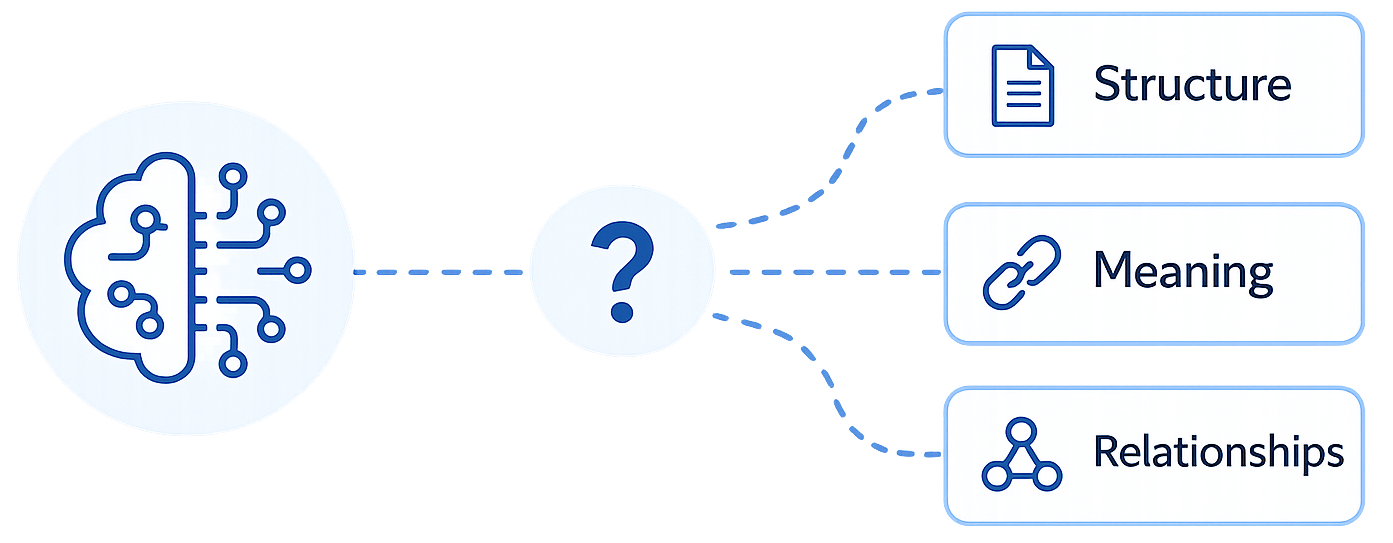
AI systems fail to deliver reliable insights without structured, contextualised data.
Chemantics adds structure, meaning, and relationships to data, enabling reliable and explainable AI-driven insights.

Hidden Scientific Knowledge
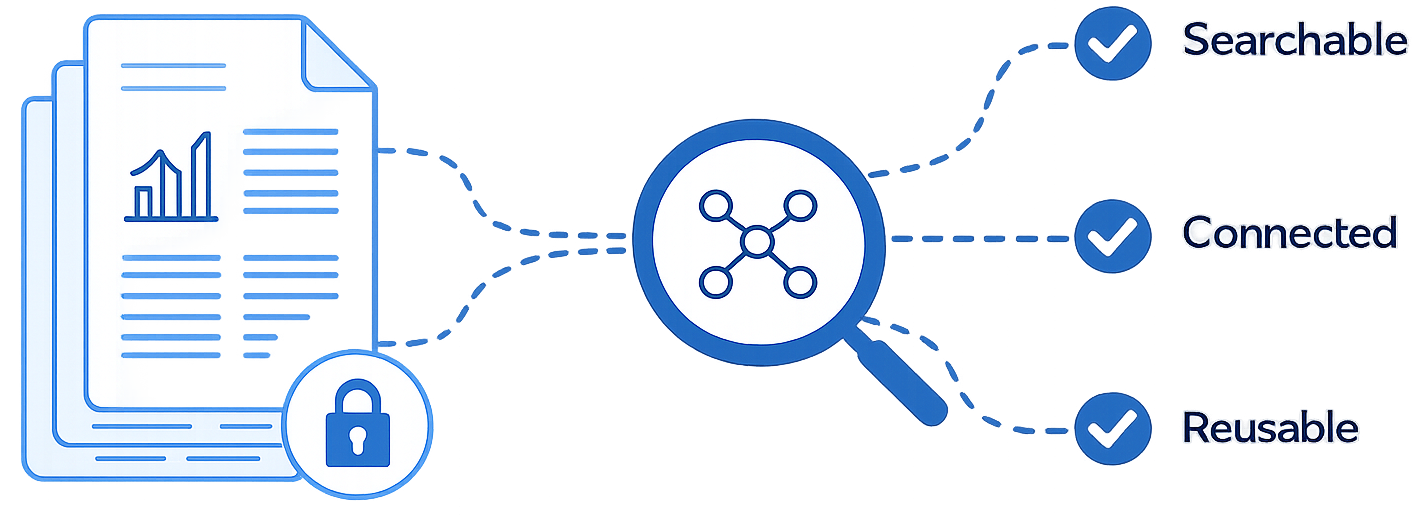
Critical insights remain hidden in documents and siloed systems.
Chemantics makes scientific knowledge searchable, connected, and reusable across documents and systems.

From Fragmented Data to Connected, Explainable Scientific Intelligence
Fragmented scientific data limits insight, slows discovery, and reduces the impact of AI. Turning data into usable intelligence requires requires structure, context, and relationships. Chemantics enables this transformation step by step.

Unstructured Raw Data
Connected Data

Structured Knowledge
Connected data is organised into modular, reusable knowledge structures that can be applied across workflows.
AI-Ready Data
Explainable Reasoning
Scientific Intelligence
Industries We Support
We connect and unify complex scientific and operational data across the entire value chain to deliver explainable, Al-ready scientific intelligence.

Pharmaceuticals
Connect R&D, clinical, regulatory, and manufacturing data into a unified, traceable scientific intelligence layer.

Cosmetics
Unify formulation, ingredient, and product data to create transparent, explainable product intelligence.

Chemicals
Build compound-centric intelligence across the chemical value chain—from research to production, safety, and supply.

Advanced Materials
Connect material structures, compositions, and processing data to link properties and performance across the development lifecycle.
From Fragmented Data to Scientific Intelligence
Powered by a Unified Semantic Layer
Chemantics provides the structure and relationships needed to transform fragmented data into connected, reusable, and explainable scientific intelligence.